载入中...
搜索中...
未找到
Game.WidgetsList
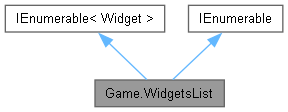
类 Game.WidgetsList 继承关系图:
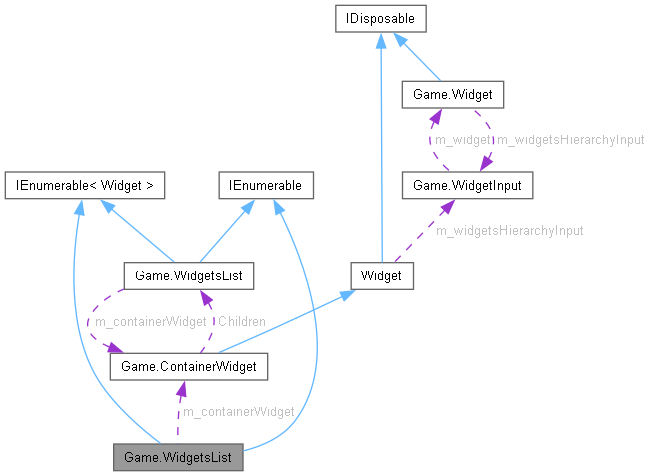
Game.WidgetsList 的协作图:
类 | |
| struct | Enumerator |
Public 成员函数 | |
| WidgetsList (ContainerWidget containerWidget) | |
| void | Add (Widget widget) |
| void | Add (params Widget[] widgets) |
| void | AddRange (IEnumerable< Widget > widgets) |
| void | Insert (int index, Widget widget) |
| void | InsertBefore (Widget beforeWidget, Widget widget) |
| void | InsertAfter (Widget afterWidget, Widget widget) |
| void | Remove (Widget widget) |
| void | RemoveAt (int index) |
| void | Clear () |
| int | IndexOf (Widget widget) |
| bool | Contains (Widget widget) |
| Widget | Find (string name, Type type, bool throwIfNotFound=true) |
| Widget | Find (string name, bool throwIfNotFound=true) |
| T | Find< T > (string name, bool throwIfNotFound=true) |
| T | Find< T > (bool throwIfNotFound=true) |
| Enumerator | GetEnumerator () |
Public 属性 | |
| ContainerWidget | m_containerWidget |
| List< Widget > | m_widgets = [] |
| int | m_version |
属性 | |
| int | Count [get] |
| Widget | this[int index] [get] |
Private 成员函数 | |
| IEnumerator< Widget > IEnumerable< Widget >. | GetEnumerator () |
| IEnumerator IEnumerable. | GetEnumerator () |
构造及析构函数说明
◆ WidgetsList()
| Game.WidgetsList.WidgetsList | ( | ContainerWidget | containerWidget | ) |
成员函数说明
◆ Add() [1/2]
| void Game.WidgetsList.Add | ( | params Widget[] | widgets | ) |
函数调用图:

◆ Add() [2/2]
| void Game.WidgetsList.Add | ( | Widget | widget | ) |
函数调用图:

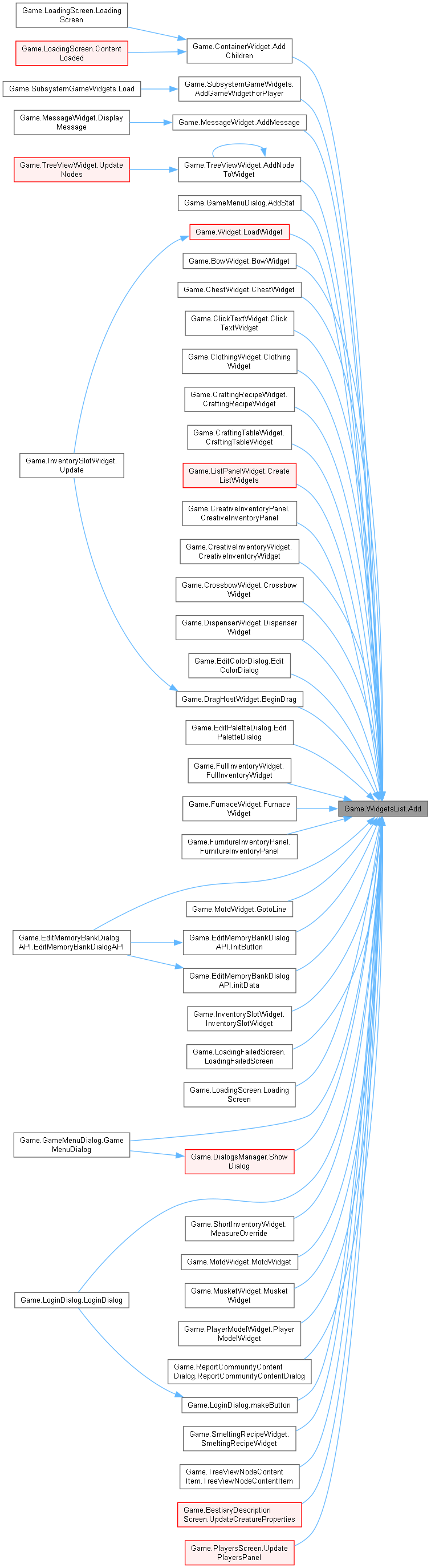
这是这个函数的调用关系图:
◆ AddRange()
| void Game.WidgetsList.AddRange | ( | IEnumerable< Widget > | widgets | ) |
这是这个函数的调用关系图:

◆ Clear()
| void Game.WidgetsList.Clear | ( | ) |
函数调用图:

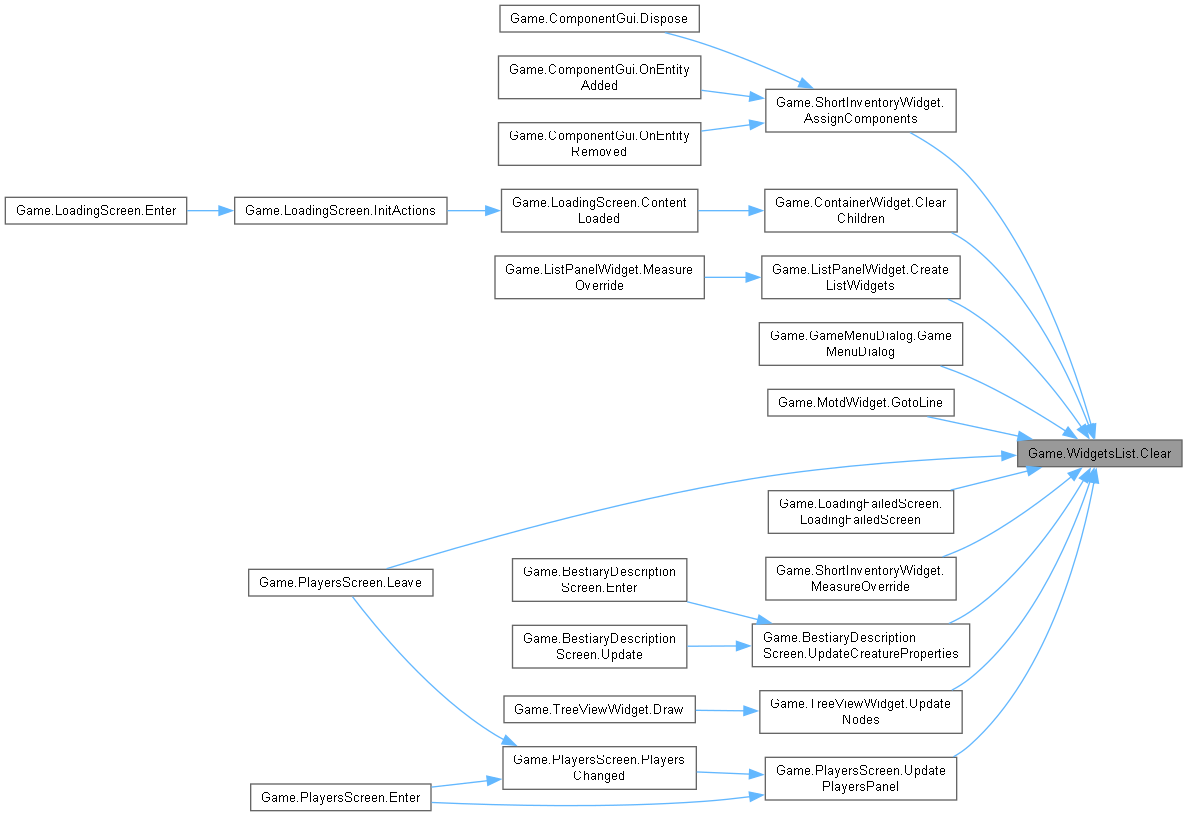
这是这个函数的调用关系图:
◆ Contains()
| bool Game.WidgetsList.Contains | ( | Widget | widget | ) |
◆ Find() [1/2]
| Widget Game.WidgetsList.Find | ( | string | name, |
| bool | throwIfNotFound = true ) |
函数调用图:

◆ Find() [2/2]
| Widget Game.WidgetsList.Find | ( | string | name, |
| Type | type, | ||
| bool | throwIfNotFound = true ) |
◆ Find< T >() [1/2]
| T Game.WidgetsList.Find< T > | ( | bool | throwIfNotFound = true | ) |
- 类型限制
-
T : class
函数调用图:

◆ Find< T >() [2/2]
| T Game.WidgetsList.Find< T > | ( | string | name, |
| bool | throwIfNotFound = true ) |
- 类型限制
-
T : class
函数调用图:

◆ GetEnumerator() [1/3]
| Enumerator Game.WidgetsList.GetEnumerator | ( | ) |
◆ GetEnumerator() [2/3]
◆ GetEnumerator() [3/3]
|
private |
◆ IndexOf()
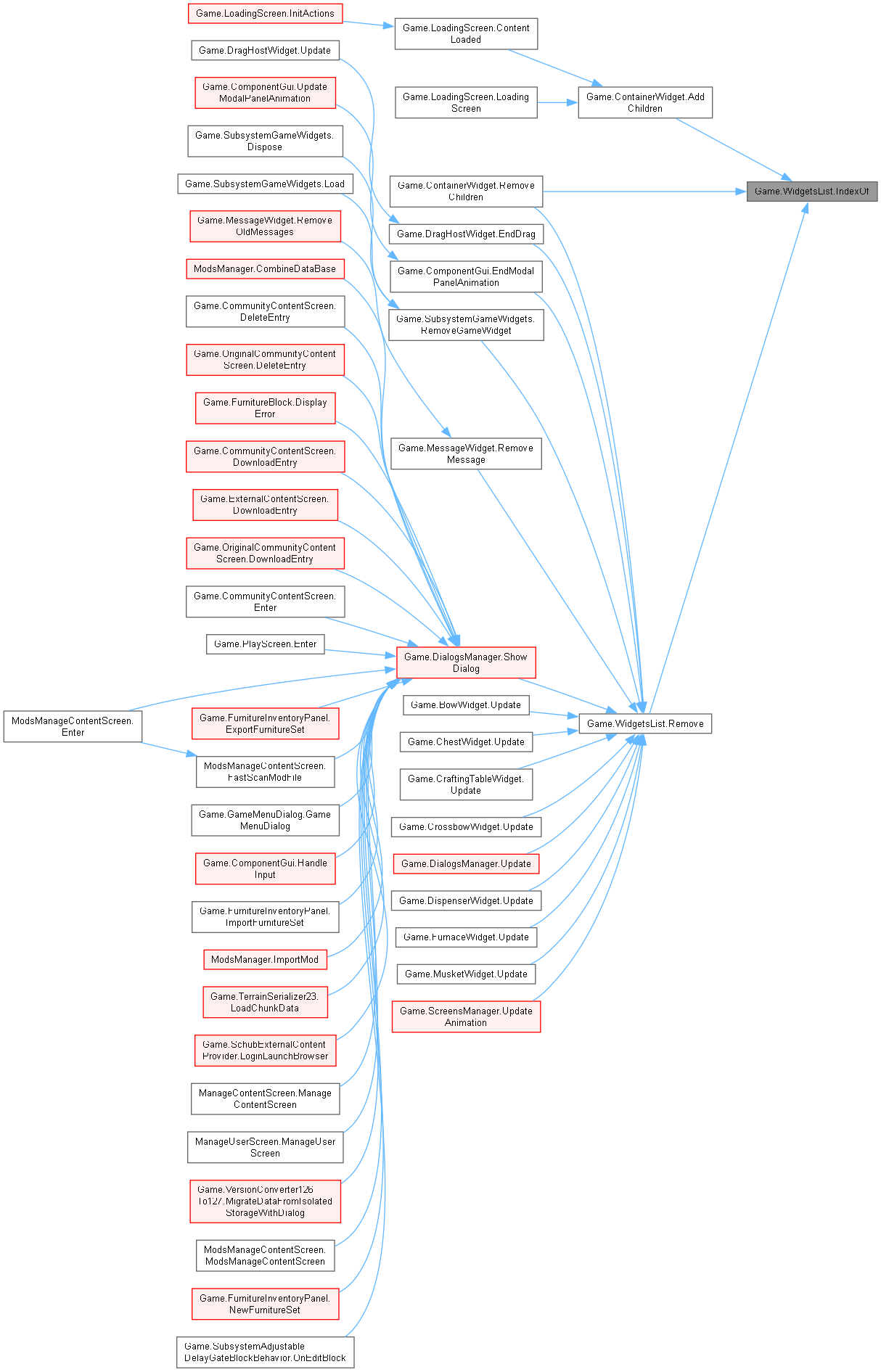
| int Game.WidgetsList.IndexOf | ( | Widget | widget | ) |
这是这个函数的调用关系图:
◆ Insert()
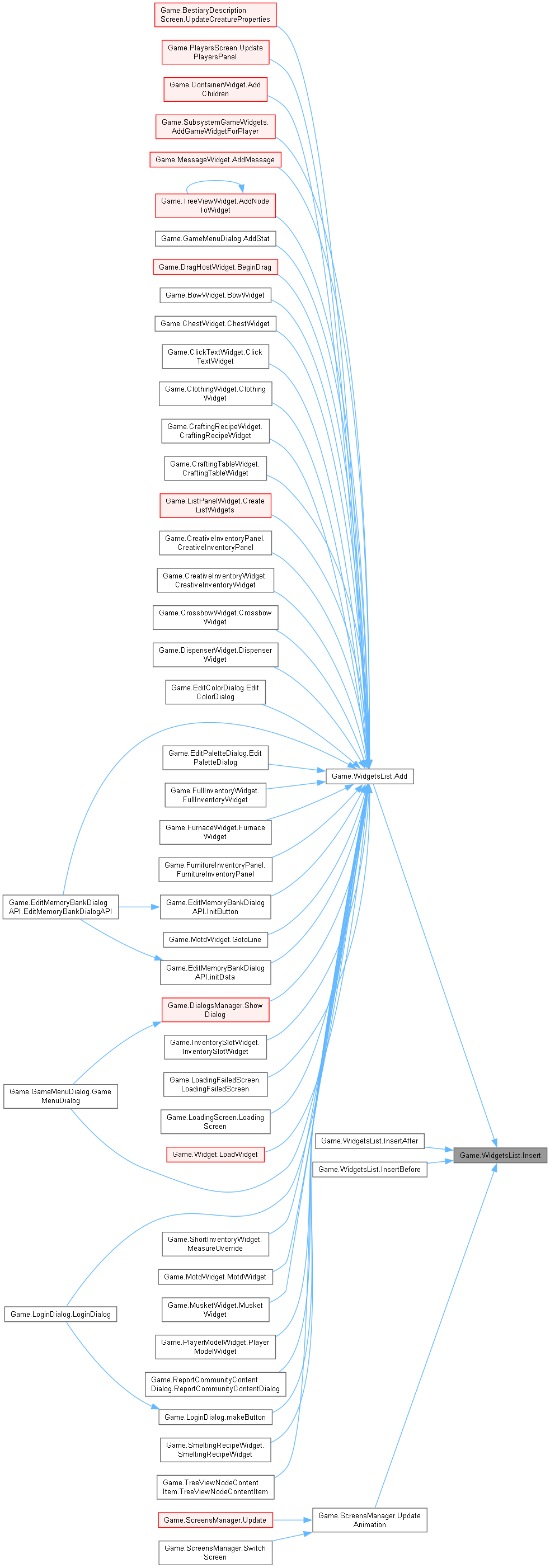
| void Game.WidgetsList.Insert | ( | int | index, |
| Widget | widget ) |
函数调用图:

这是这个函数的调用关系图:
◆ InsertAfter()

◆ InsertBefore()

◆ Remove()
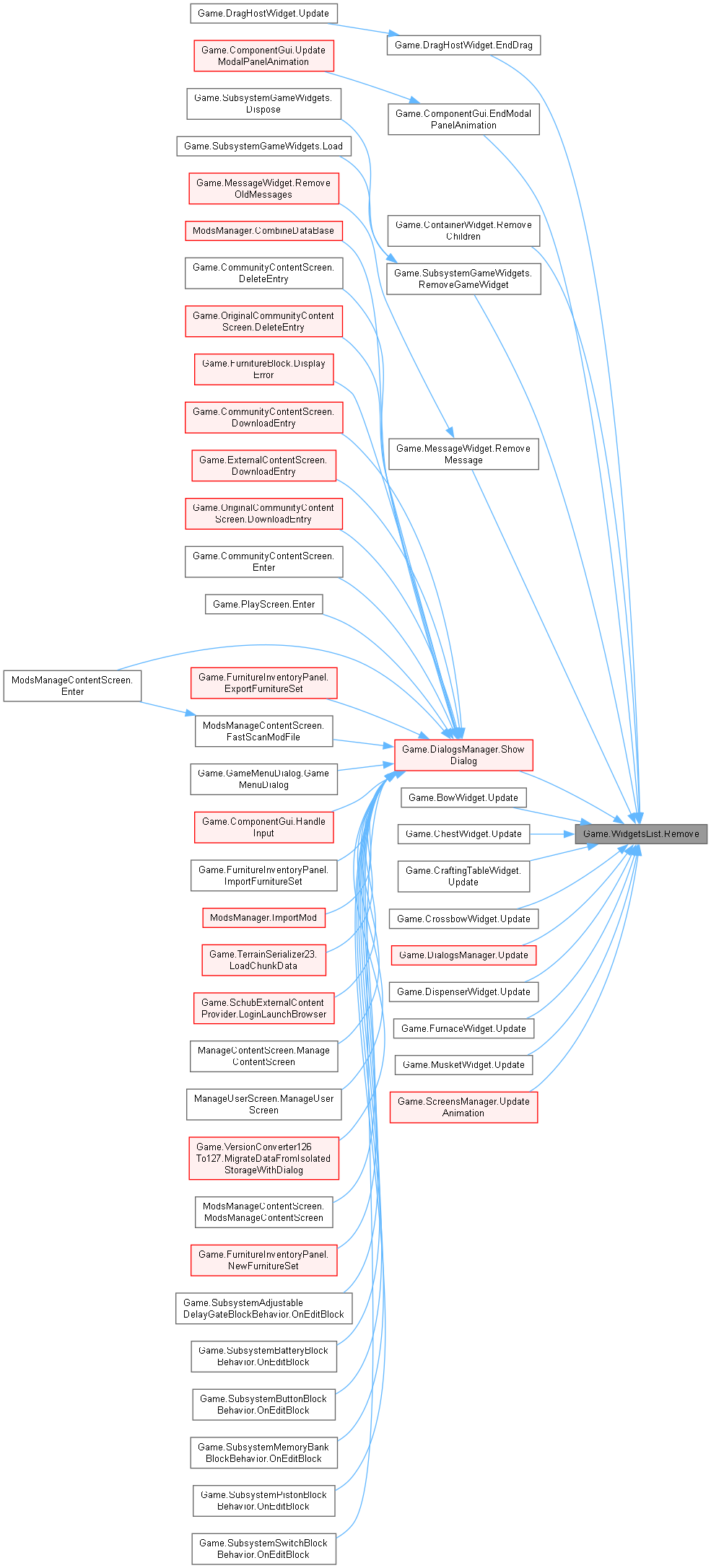
| void Game.WidgetsList.Remove | ( | Widget | widget | ) |
函数调用图:

这是这个函数的调用关系图:
◆ RemoveAt()
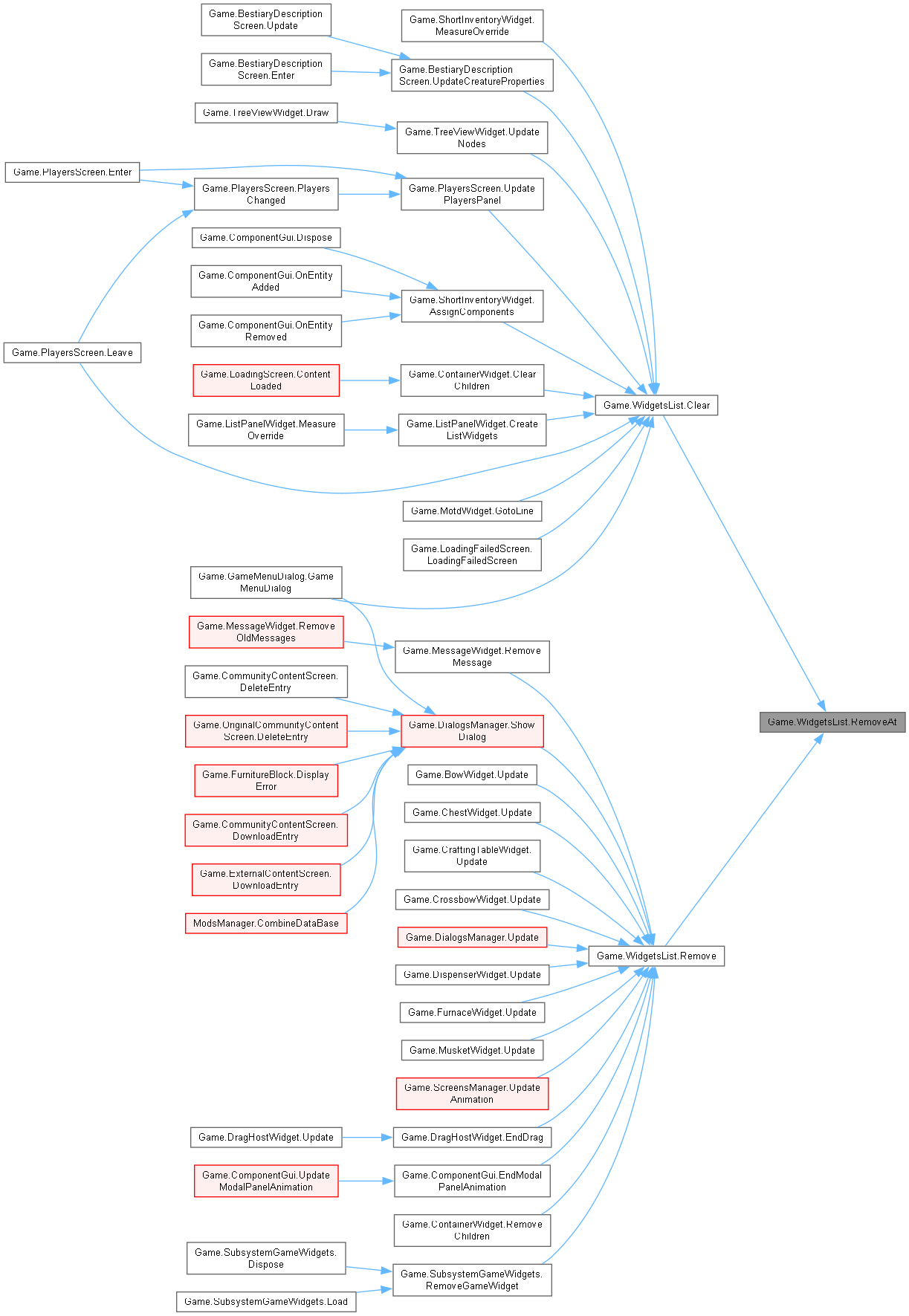
| void Game.WidgetsList.RemoveAt | ( | int | index | ) |
函数调用图:

这是这个函数的调用关系图:
类成员变量说明
◆ m_containerWidget
| ContainerWidget Game.WidgetsList.m_containerWidget |
◆ m_version
| int Game.WidgetsList.m_version |
◆ m_widgets
| List<Widget> Game.WidgetsList.m_widgets = [] |
属性说明
◆ Count
|
get |
◆ this[int index]
|
get |
该类的文档由以下文件生成:
- Widget/WidgetsList.cs